
Top Narrative Intelligence Platforms for Communications Teams
 Amanda Burkard
Narrative attacks can reshape public perception of a brand, executive, or major company event within hours. Here’s what communications teams should look for in a narrative intelligence and monitoring platform.
Quick Answers
What should communications teams look for in a narrative intelligence platform? Communications teams should look for platforms that surface harmful narratives early, show who is amplifying them, and reveal whether public sentiment is organic or part of a coordinated disinformation campaign.
How does narrative intelligence help communications teams? Narrative intelligence helps communications teams by providing earlier visibility into emerging reputational threats and the context needed to detect and respond to narrative attacks before they develop into larger crises.
How is social listening different from narrative attacks? Social listening measures mentions, sentiment, and conversation volume. Narrative intelligence is the layer on top of social intelligence that reveals how a narrative is being spread, who is influencing it, and whether bot networks and coordinated activity are amplifying the conversation.
Communications teams have long relied on traditional media monitoring and social listening tools to understand how people are talking about their organization online. Those signals remain useful, but they do not always explain the full picture of who is driving a conversation and how it is being amplified. Coordinated networks, bot activity, and AI-generated content can make a narrative appear more popular or organic than it really is. Narrative intelligence is a growing category. Gartner projects that by 2029, 45% of chief communications officers will adopt narrative intelligence technologies to support reputation monitoring as the modern disinformation landscape intensifies.
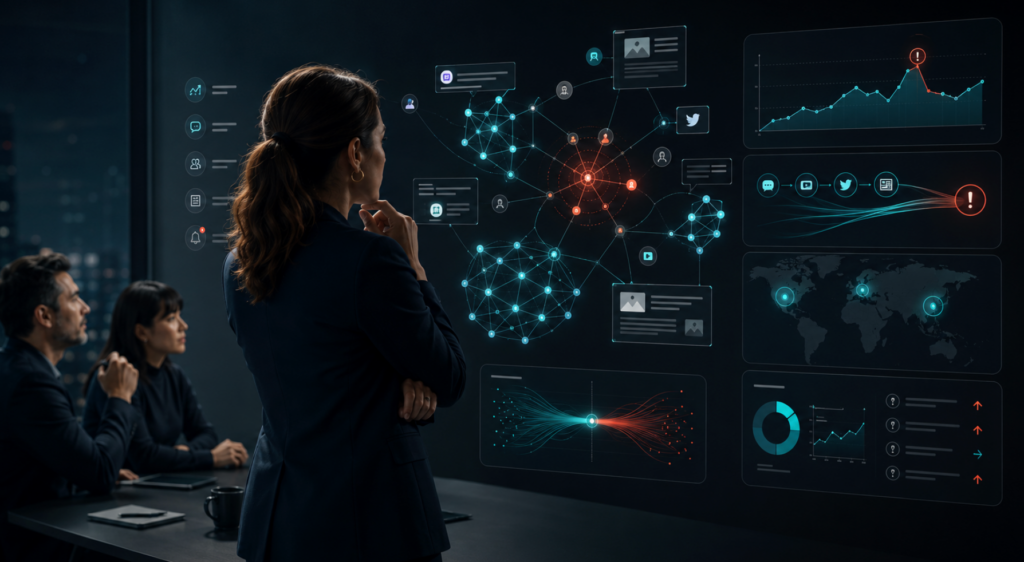
The distinction between social listening and narrative intelligence is important during a fast-moving reputational event. A communications team may see negative sentiment rising without knowing whether it reflects genuine stakeholder concern or a coordinated network of bots and threat actors amplifying harmful narrative attacks against your brand. Responding aggressively to manufactured influence operations can give a harmful narrative additional attention, while treating genuine backlash as manipulation can also deepen a reputational problem. Narrative intelligence provides the additional context teams need to understand the full scope of what is happening during a narrative attack and to respond strategically.
DOWNLOAD: Complimentary Gartner Emerging Market Quadrant for Narrative Intelligence
What is Narrative Intelligence?
Blackbird.AI defines a narrative as any association that shapes perceptions of a person, place, or thing within the information ecosystem. Narrative intelligence helps organizations understand how narratives form, spread, and scale, including the actors, networks, communities, and behaviors that influence them.
For communications teams, narrative intelligence provides context beyond individual posts or mentions by showing a narrative’s broader structure and how it is being amplified across networks. That visibility helps teams detect and respond to emerging narrative threats before they escalate.
What is Narrative Intelligence vs. Social Listening?
Social listening answers questions like “What are people saying?” and “How much are they talking about it?” It monitors posts, mentions, sentiment, conversation trends, and engagement.
Narrative intelligence adds the analysis and response layer. It examines the narratives shaping those conversations, who is driving them, how they spread across networks, and whether coordinated or manipulative activity is influencing their reach. For communications teams, this provides deeper context to detect and respond to narrative attacks.
These are the top narrative intelligence and monitoring platforms for communications teams:
1. Blackbird.AI
Blackbird.AI is a narrative intelligence detection and response company that protects executives, organizations, and institutions from narrative-based disinformation attacks that cause financial, operational, reputational, and physical harm. Founded by AI experts, threat intelligence analysts, and national security professionals, Blackbird.AI built the first narrative intelligence platform. Communications teams use the platform to detect harmful narratives early, understand who is driving them, and respond before reputational damage compounds.
Constellation Narrative Intelligence Platform
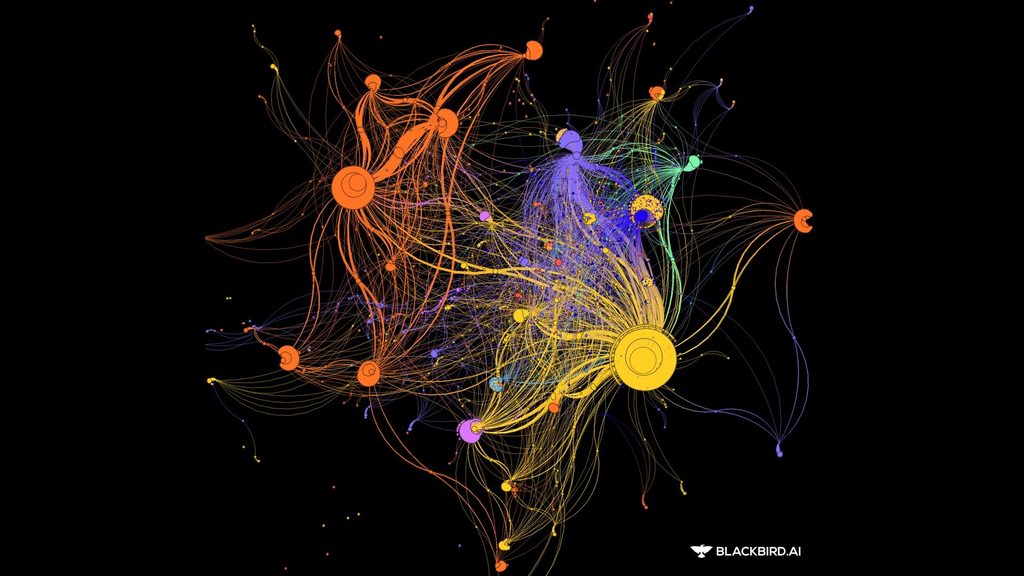
Blackbird.AI’s Constellation Narrative Intelligence Platform identifies narratives, assesses the risks they carry, and shows how they propagate across the information environment. It analyzes text, images, and memes in more than 25 languages across social media, news, the dark web, and other online sources. Constellation surfaces narrative threats through five distinct signals: narratives, influence, networks, anomalous behavior, and cohorts. For communications teams, this means visibility into whether a spike in negative conversation reflects genuine stakeholder concern or coordinated manipulation.
Enterprise integration: The Constellation API embeds narrative intelligence into communications workflows, media monitoring dashboards, executive reporting systems, and crisis response platforms. Blackbird.AI brings narrative intelligence into communications, legal, executive, and public-sector environments with agentic response capabilities and MCP-enabled integrations.
Product suite: Blackbird.AI’s Constellation product suite covers narrative monitoring, claim contextualization, deepfake detection, and reputational risk assessments.
| Blackbird.AI Product | What it does | Communications Team application |
| Narrative Feed | Automatically discovers and ranks high-risk narratives across social media, news, web content, and the dark web. | Surfaces emerging narrative threats before they become reputational crises. |
| Compass Context | Analyzes online claims, articles, and social posts against reputable sources and returns cited context with a risk label. | Helps teams assess whether a claim circulating about their organization or executive is grounded in fact or likely to escalate. |
| Compass Vision | Detects AI-generated images and videos and provides an authenticity assessment with confidence scoring. | Identifies manipulated media and deepfakes that could damage brand perception or impersonate executives. |
| RAV3N Recon | Analyzes up to two years of content associated with executives, influencers, affiliates, and threat actors. | Supports proactive reputation monitoring, spokesperson vetting, and pre-event narrative risk assessment. |
| RAV3N Watch | Provides narrative intelligence research and expert analysis. | Gives communications teams access to analyst context during fast-moving reputational events. |
| RAV3N Agent | Provides AI-assisted analysis within Constellation workflows. | Helps teams investigate narrative activity and build faster, better-informed response strategies. |
Communications use cases include: reputation monitoring, executive communications protection, crisis response, brand narrative risk, M&A communications, IPO narrative monitoring, spokesperson and influencer vetting, and stakeholder trust assessment.
Market recognition: Blackbird.AI was positioned highest for both Potential to Execute and Potential for Market Disruption among Market Shapers in the June 2026 Gartner Emerging Market Quadrant for Narrative Intelligence. Gartner also identified Blackbird.AI as the Company to Beat for Disinformation Narrative Intelligence in its AI Vendor Race research.
2. Alethea
Alethea provides narrative risk and online threat intelligence through its Artemis AI platform. Artemis delivers early warning of narrative threats and analyzes who is behind them, how activity is spreading, and whether it is coordinated. For communications teams, Alethea also supports threat investigation, executive protection, synthetic media detection, and mitigation workflows, including platform takedown requests.
3. Logically
Logically provides Narrative Decision Intelligence through Logically Intelligence and PRISMα. Logically Intelligence provides monitoring, narrative clustering, alerts, and reporting across public and open-source information. PRISMα is a customizable agentic intelligence system designed for more mission-specific intelligence questions, simulations, and decision support. The company has a strong orientation toward national security, defense, public safety, and enterprise risk.
4. Alto Intelligence
Alto Intelligence provides an AI-powered platform focused on cognitive and narrative threats across the digital information environment. Its capabilities include narrative and actor analysis, synthetic media detection, and AI-assisted threat monitoring. Alto also offers DISARM-aligned intelligence via STIX/TAXII and OpenCTI-compatible workflows, enabling communications teams to integrate narrative threat signals into existing communications and threat intelligence systems.
5. Cyabra
Cyabra provides narrative intelligence with a strong focus on authenticity and coordinated online activity. Its product suite includes Authenticity Analysis, Coordination & Amplification Analysis, Real-Time Narrative Alerts, and Deepfake Detection. These capabilities help communications teams distinguish organic conversation from manipulation and identify fake profiles, bot networks, coordinated campaigns, and other social-originated threats.
6. PeakMetrics
PeakMetrics is an AI-powered narrative intelligence platform that uses AI agents to surface emerging narratives, bot activity, deepfakes, and coordinated campaigns. The platform helps teams distinguish authentic discourse from manufactured activity and understand who is driving emerging narratives. PeakMetrics also offers an MCP Server that connects live narrative intelligence with AI assistants and security workflows.
7. Osavul
Osavul provides narrative intelligence through Nebula, its platform for preemptive situational awareness and narrative analysis. Nebula gives communications and intelligence teams access to open-source and harder-to-reach data, detects information threats, analyzes emerging narratives, and provides automated early warning. Osavul positions the platform across information operations, geopolitical risk, and broader hybrid-threat environments.
The Way Forward: Key Takeaways for Communications Leaders and Teams
Modern narrative attacks have changed what communications teams need from traditional social listening and media monitoring technology. Knowing that conversation volume or negative sentiment is increasing is a useful metric, but it doesn’t explain who is behind the spread and whether it accurately reflects genuine public concern.
Here are three key takeaways for communications leaders and teams:
- Look beyond mentions and sentiment. Communications teams need visibility into the narratives, actors, networks, and behaviors shaping public perception.
- Build narrative intelligence into crisis response. Early context helps teams decide whether to respond to a narrative attack, how to frame that response, and which stakeholders to involve.
- Coordinate narrative risk across the organization. Communications, security, legal, and executive teams benefit from a shared view of emerging narrative threats and clear escalation procedures.
Narrative intelligence gives communications teams the context needed to detect and respond to harmful narratives. As coordinated manipulation and AI-generated content become easier to create and scale, that visibility is becoming an increasingly important part of protecting brand reputation and stakeholder trust.
Amanda Burkard • Marketing Manager
Amanda Burkard is a Marketing Manager at Blackbird.AI, where she supports content development, demand generation, event coordination, and marketing operations. Outside of work, Amanda is an accomplished Irish dancer. She holds a B.A. in Psychology from the University of Virginia.
Amanda Burkard is a Marketing Manager at Blackbird.AI, where she supports content development, demand generation, event coordination, and marketing operations. Outside of work, Amanda is an accomplished Irish dancer. She holds a B.A. in Psychology from the University of Virginia.
About Blackbird.AI

Blackbird.AI is the Narrative Intelligence Detection and Response company protecting executives, organizations, and institutions from narrative-based disinformation attacks that cause financial, operational, reputational, and physical harm. Blackbird.AI’s Constellation Platform identifies the actors, networks, bots, and communities driving them; and turns those signals into early warning, decision intelligence, and coordinated response. Blackbird.AI brings Narrative Intelligence into the workflows where teams already operate, including cybersecurity, communications, legal, executive, and public-sector environments, with agentic response capabilities and MCP-enabled integrations that help organizations act faster. Founded by AI experts, threat intelligence analysts, and national security professionals, Blackbird.AI helps customers defend trust, strengthen resilience, and Own The Narrative. To learn more, visit Blackbird.AI.