



RAM and SSD Price Surge Fuels Narrative Attacks Against Data Centers and Technology Brands
As RAM and SSD component prices surge, major technology brands face growing backlash and narrative attacks over rising consumer electronics costs, pricing power, and who should absorb the increases.

Dall-E 3
Quick Answers
Why are consumer electronics becoming more expensive? AI infrastructure demand, constrained chip supply, shifting manufacturing priorities, tariffs, trade restrictions, and geopolitical uncertainty are increasing component costs across laptops, tablets, phones, gaming systems, and other devices.
What is the difference between RAM, SSDs, DRAM, NAND, and HBM? RAM is a computer’s short-term working memory and typically uses DRAM chips. SSDs store a computer’s files, applications, and operating system for long-term use using NAND flash chips. HBM is a specialized type of DRAM used heavily in AI accelerators and data centers.
Why are RAM and SSD price increases creating narrative risk for technology brands? Consumers are assigning blame in different directions, fueling competing narratives about pricing power, market access, consumer lock-in, and who, brands or consumers, should absorb the higher costs. Consumer lock-in refers to device designs that require buyers to choose and pay for memory or storage upfront because those components cannot be upgraded later.
UPDATE: Since this report was published in July, the gap between demand for AI infrastructure and consumer electronics sales has widened. In September, TrendForce projected that conventional DRAM contract prices would rise another 10–15% in the fourth quarter of 2026, while NAND flash prices would increase 15–20%. Demand for enterprise SSD capacity was expected to grow more than 80% year over year as cloud providers expanded AI infrastructure. Meanwhile, PC manufacturers began reducing storage capacity in mainstream devices to control costs. By October 30, TrendForce reported that consumer DRAM spot prices had fallen from their peaks, reflecting weaker consumer demand even as long-term supply remained constrained. These developments reinforce the distinction between documented supply shortages and allegations that manufacturers are deliberately manipulating prices.
The financial consequences are becoming clearer. On October 29, Intel warned that high memory prices were weakening PC demand, with the slowdown expected to continue through at least the first half of 2027. An October 8 TrendForce analysis found that processors, DRAM, and SSDs accounted for about 68% of a mainstream $900 laptop’s component costs, increasing pressure on manufacturers to raise prices, cut specifications, or accept lower profit margins. These competing pressures complicate the narratives surrounding technology brands. Higher component costs provide a legitimate explanation for some price increases, but manufacturers still make independent decisions about retail pricing, memory capacity, and upgradeability. As consumers delay purchases or choose lower-cost alternatives, companies face growing pressure to explain those decisions and distinguish documented supply-chain costs from unsupported allegations of profiteering. Manipulated narratives about data center component prices have largely ignored the new figures.
At the end of June 2026, several major technology companies announced price increases across core products, including laptops, tablets, gaming devices, and other consumer devices. The increases quickly drew intense consumer backlash, while narrative attacks blaming technology brands, memory-chip manufacturers, AI companies, and government policy spread across online communities.
As data center infrastructure expands rapidly, RAM and SSD prices have surged across the industry in 2026, putting pressure on the global semiconductor supply chain. AI data center demand is a major factor, alongside tariffs, trade restrictions, geopolitical uncertainty, and broader supply chain pressures. As those costs reach consumers, the conversation has expanded beyond affordability into competing narratives about pricing power, market access, consumer lock-in, and who should absorb the higher costs.
Several large technology firms announced price increases or other pricing actions as memory and storage costs rise. Pricing decisions vary across brands, leading consumers to question how much of the increase reflects higher component costs, when additional increases may arrive, and which products will be affected next.
DOWNLOAD: Complimentary Gartner Emerging Market Quadrant for Narrative Intelligence
Why are RAM and SSD prices increasing in 2026?
RAM and SSD prices are increasing because several parts of the semiconductor supply chain are under pressure. AI infrastructure is creating strong demand for HBM, server DRAM, and enterprise storage. Chipmakers are directing more capacity and investment toward those products. That shift is tightening supply and raising costs for conventional DRAM used in laptops and phones, as well as for NAND used in SSDs. Tariffs and trade restrictions are adding further pressure. Device makers then face higher component costs, which can drive up prices for laptops, tablets, phones, gaming systems, and other electronics.
Gartner estimates that combined DRAM and SSD prices will rise 130 percent by the end of 2026. The increase is expected to push PC prices up 17 percent and smartphone prices up 13 percent compared with 2025. Gartner also expects memory costs to reach 23 percent of a PC’s bill of materials, up from 16 percent in 2025. Gartner does not expect meaningful pricing relief until late 2027.
The pressure is already reaching consumers directly. Several of the industry’s largest brands have adjusted pricing in response, leaving consumers to weigh how much of each change reflects component costs versus other business decisions. Those decisions vary by company, leading consumers to question how much of each increase reflects component costs and which products may be affected next.
A recent Blackbird.AI analysis found growing consumer attention following a widely shared post that amplified a warning from engineers at Valve, the company behind Steam and the Steam Deck. They said the memory shortage was still worsening and RAM and SSD prices were likely to keep rising. The post reached 5.2 million engagements, amplifying the narrative that consumers will keep paying more as AI demand strains supply.
Is the current RAM and SSD shortage different from past chip shortages?
Past shortages were driven largely by factory shutdowns, shipping delays, and other supply disruptions, most notably during and after the COVID-19 pandemic. The current pressure is driven more by surging demand and limited capacity, as AI infrastructure buyers compete for memory products and manufacturing resources that also support consumer electronics. New semiconductor capacity also takes years to build, which can keep supply tight even as prices rise.
How does one supply-chain event turn into several narrative attacks?
One supply chain event can split into several narratives because it affects different stakeholders in different ways. Consumers may see an affordability problem, while investors may focus on potential sales impacts and watch margins. Each group can hold a different party responsible for price increases, reducing complex supply-chain pressures to simple, shareable, and amplified narrative attacks.
We identified five narratives shaping the online conversations around rising RAM and SSD prices.
Narrative #1: AI data centers are hoarding memory supply while everyday consumers pay the price
This narrative frames the shortage as a competition between AI infrastructure and everyday buyers. AI data centers need large amounts of HBM, server DRAM, and enterprise storage. Chipmakers are directing more capacity toward those products, leaving tighter supply for consumer electronics. The framing has become so widespread that some online communities now call the price surge “RAMageddon.” The term turns a complex supply-chain issue into a simple warning that consumer technology is about to become much more expensive.
The narrative reached a key inflection point on July 18, 2026, when engineers at Valve, the company behind Steam and the Steam Deck, warned: “There’s no light at the end of the tunnel, honestly. It’s still getting worse.” A post amplifying the quote reached 5.2 million engagements. Our analysis found that the amplification moved the issue beyond finance and semiconductor circles, reaching towards much larger gaming and consumer audiences. The framing was easy to grasp and easy to share, with online posts portraying AI companies as securing the memory supply at consumers’ expense.
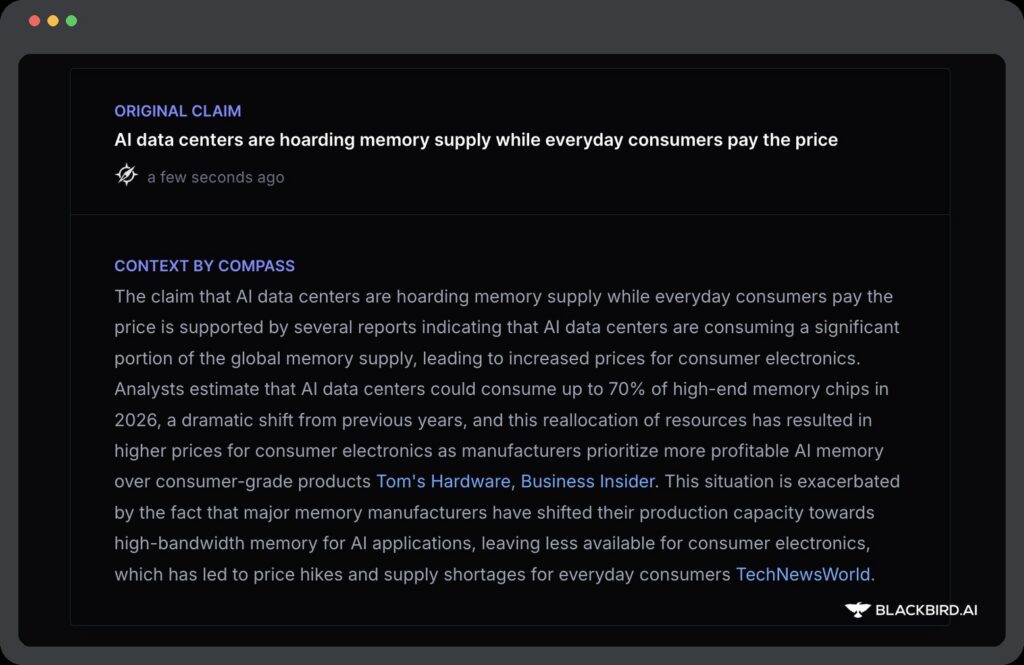
Narrative #2: Major memory-chip manufacturers are deliberately restricting supply to keep prices high
This narrative argues that the shortage reflects deliberate production choices rather than factory constraints. A July 21 post receiving 14,700 engagements captured the framing directly: “None of it is a factory shortage. It is three companies rationally choosing to feed AI data centers.”
Major manufacturers have prioritized high-margin HBM for AI applications, reducing the supply of conventional DRAM and NAND used in consumer electronics. However, the available narratives point to strong market demand rather than a coordinated effort to manipulate prices. Manufacturers are also investing in additional production capacity to address the shortage.
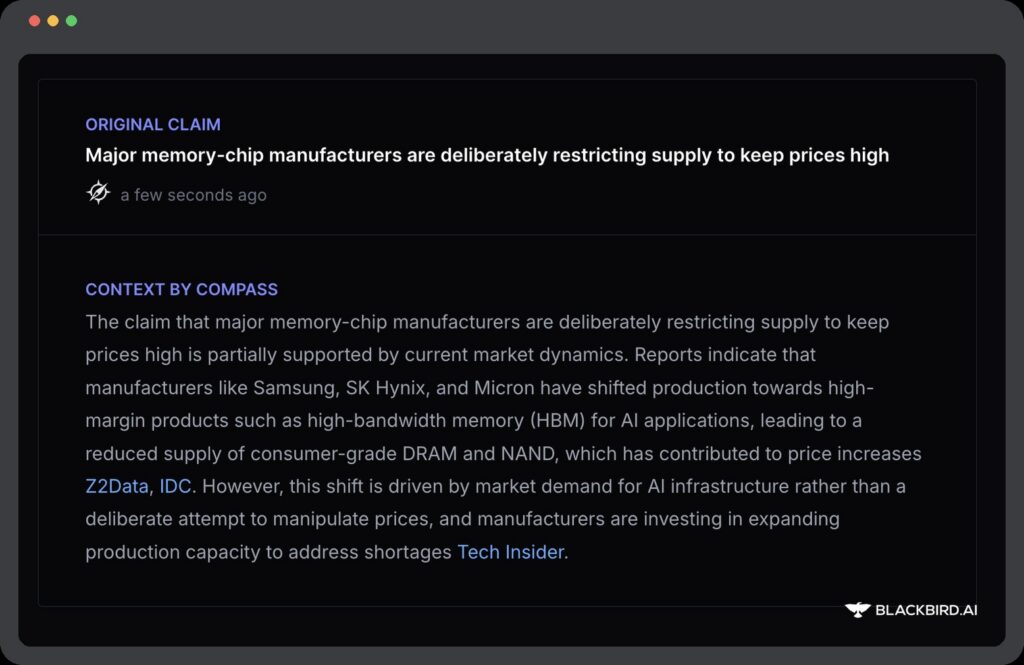
Narrative #3: Technology companies are hiding behind the shortage to justify inflated price increases
This narrative argues that technology companies use higher RAM and SSD costs to justify price increases that outpace increases in the underlying components. A July 18 post that received 708,000 engagements showed how a used professional computer could be upgraded to 192GB of RAM for roughly $1,240, giving consumers a simple benchmark to question whether current device prices match higher component costs.
Need help protecting your organization?
Book a demo today to learn more about Blackbird.AI.
That kind of comparison is easy to capture in a screenshot and easy to share. It can spread the narrative faster than a company can explain supplier contracts, tariffs, inventory timing, or other pricing factors. The post doesn’t prove profiteering, but it provides clear visual evidence that can reinforce the perception that tech companies are charging more than the shortage alone can justify.
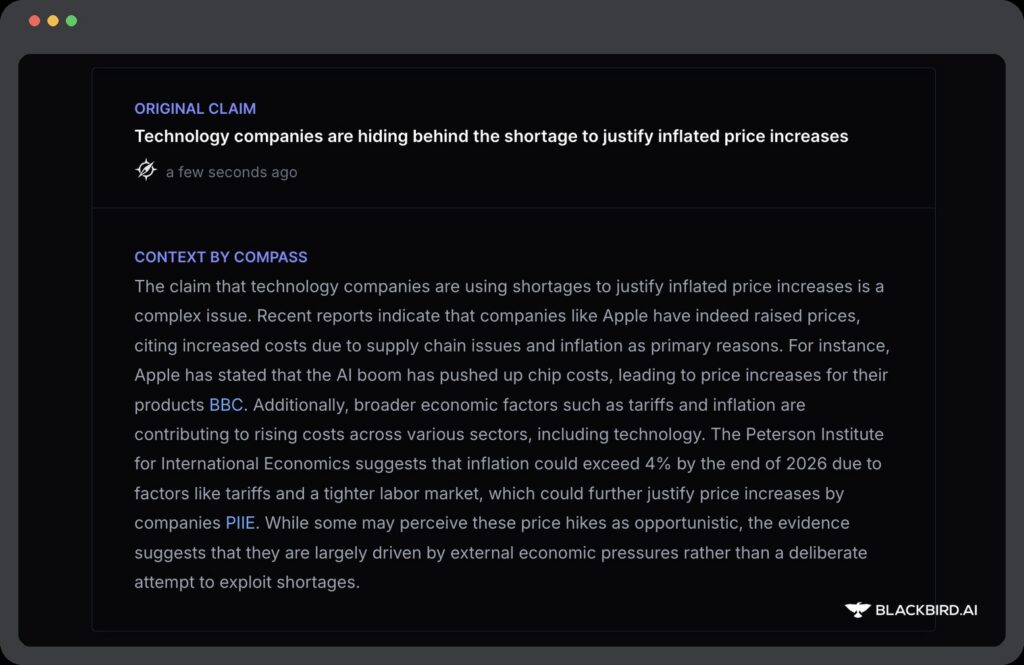
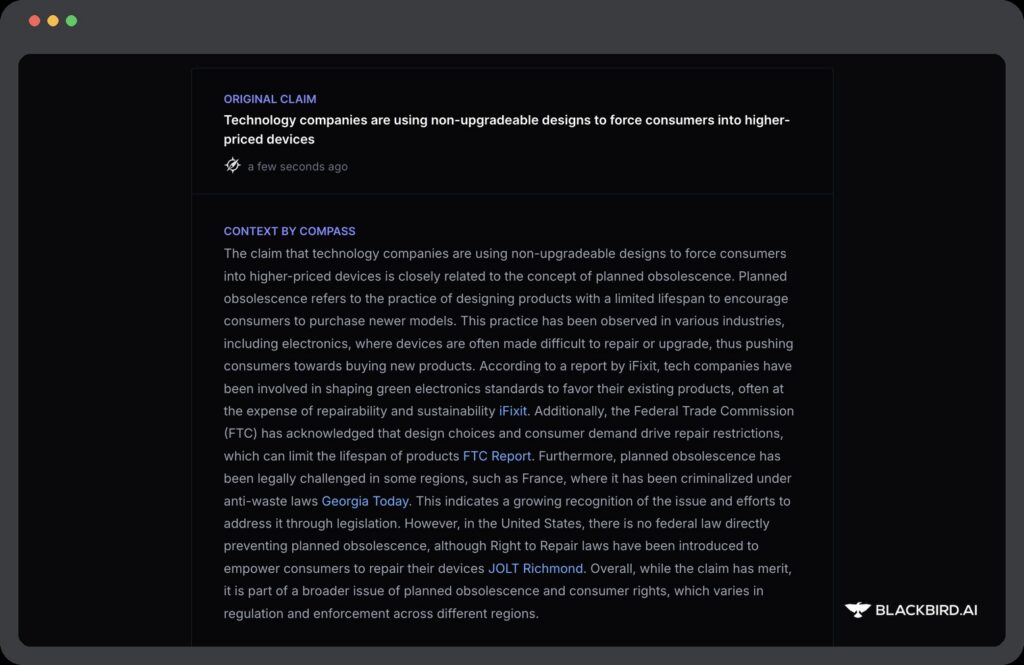
Narrative #4: Technology companies are using non-upgradeable designs to force consumers into higher-priced devices
This narrative argues that technology companies deliberately limit RAM and storage upgrades, forcing consumers to pay more upfront or replace devices sooner. Consumers must choose their capacity upfront and pay the manufacturer’s set price. They cannot buy a lower-capacity device and add cheaper third-party memory later. Consumers describe this lack of flexibility as lock-in. As prices rise, this can fuel frustration about upfront costs, right-to-repair, and device longevity.
A July 21 post that received 295,000 engagements compared an expensive internal storage upgrade with a much cheaper external alternative, giving consumers a clear comparison they could screenshot and amplify across networks.
The narrative connects non-upgradeable designs to broader concerns about planned obsolescence. Soldered components can improve performance, efficiency, and device size, but they also reduce repairability and prevent consumers from adding lower-cost memory or storage later. That tradeoff does not prove companies intentionally shorten product lifespans, but it can reinforce the narrative that restricted upgrades steer consumers toward higher-priced devices.
“Unlike deepfake detection, it monitors narratives, identifies adversaries’ intent and pinpoints audience vulnerabilities before AI disinformation attacks can cause significant damage.“
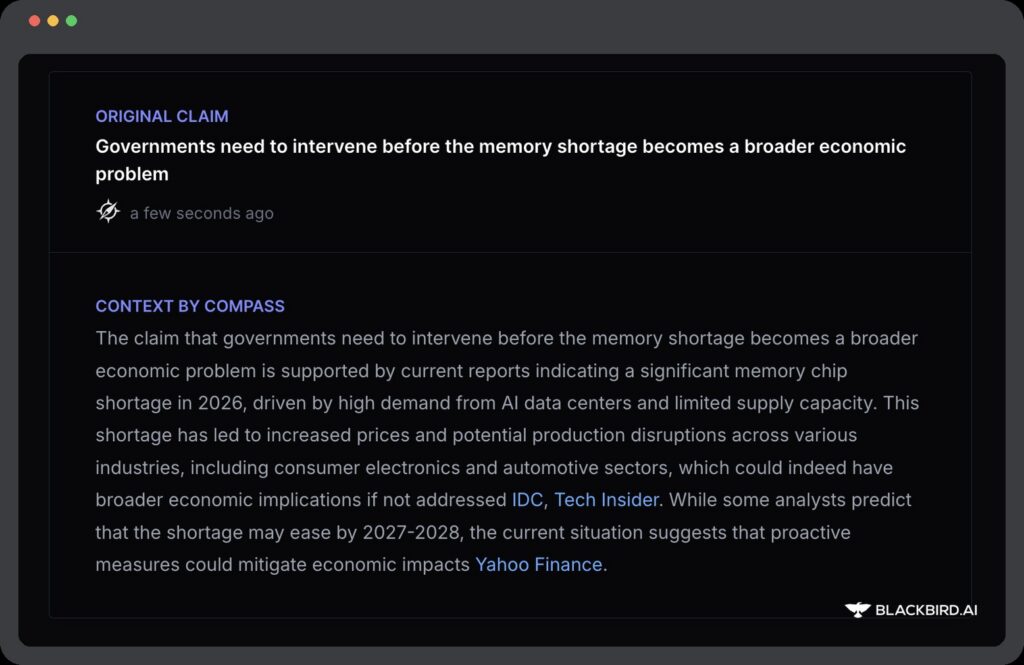
Narrative #5: Governments are failing to prevent the memory shortage from becoming a broader economic problem
This narrative frames the chip shortage as a policy failure. New semiconductor plants take years to build, and current tariffs and trade restrictions are adding pressure to component costs rather than relieving them. Supporters argue that without government action to expand domestic production capacity or adjust trade policy, rising memory costs will spread beyond consumer electronics into automotive, healthcare, and other industries. The narrative gains traction each time a new price increase is announced.
The Way Forward: Key Takeaways for Leaders
Together, these narratives show how quickly rising component costs can become a broader reputational and market-confidence issue. With RAM and SSD price pressures expected to persist into 2027, technology companies need to understand which narratives are gaining traction, who is amplifying them, and how different stakeholder groups are interpreting each new announcement.
Here are three key takeaways for leaders:
- Prepare for a prolonged narrative cycle: Memory supply pressures are expected to continue into 2027. Brands should monitor which narratives are gaining traction before each pricing announcement and anticipate how new increases could intensify consumer backlash.
- Monitor narratives affecting market confidence: Narratives about pricing and consumer demand can quickly influence investor confidence. Apple’s stock decline after its June price-increase announcement shows how narrative pressure can drive market volatility.
- Map narratives across stakeholder groups: Consumers may engage with narratives focusing on affordability and long-term costs, while investors focus on potential sales impacts and growth. Understanding how different stakeholders perceive the price surges helps organizations identify where narrative risk is likely to emerge and prepare a proactive response plan before a narrative escalates out of control.
The surge in RAM and SSD prices shows how quickly a complex supply chain issue can become a broader narrative problem. Brands and large technology companies may not control the market forces driving higher costs. Still, they do need to understand how the public and stakeholders perceive those costs, and which narratives are gaining traction before they begin to shape consumer trust and affect investor confidence.

Amanda Burkard • Marketing Manager
Amanda Burkard is a Marketing Manager at Blackbird.AI, where she supports content development, demand generation, event coordination, and marketing operations. Outside of work, Amanda is an accomplished Irish dancer. She holds a B.A. in Psychology from the University of Virginia.
Amanda Burkard is a Marketing Manager at Blackbird.AI, where she supports content development, demand generation, event coordination, and marketing operations. Outside of work, Amanda is an accomplished Irish dancer. She holds a B.A. in Psychology from the University of Virginia.

Dan Patterson • Head of Corporate Communications
Dan Patterson is a strategic communications leader driving impact at the intersection of artificial intelligence, cybersecurity, and media. At Blackbird.AI, Dan leads communication and content strategy that breaks down complex AI and cybersecurity concepts for diverse business audiences. Prior, he was the national tech correspondent for CBS News.
Dan Patterson is a strategic communications leader driving impact at the intersection of artificial intelligence, cybersecurity, and media. At Blackbird.AI, Dan leads communication and content strategy that breaks down complex AI and cybersecurity concepts for diverse business audiences. Prior, he was the national tech correspondent for CBS News.
About Blackbird.AI

Blackbird.AI is the Narrative Intelligence Detection and Response company protecting executives, organizations, and institutions from narrative-based disinformation attacks that cause financial, operational, reputational, and physical harm. Blackbird.AI’s Constellation Platform identifies the actors, networks, bots, and communities driving them; and turns those signals into early warning, decision intelligence, and coordinated response. Blackbird.AI brings Narrative Intelligence into the workflows where teams already operate, including cybersecurity, communications, legal, executive, and public-sector environments, with agentic response capabilities and MCP-enabled integrations that help organizations act faster. Founded by AI experts, threat intelligence analysts, and national security professionals, Blackbird.AI helps customers defend trust, strengthen resilience, and Own The Narrative. To learn more, visit Blackbird.AI.