



How Russian and Russian State-Aligned Narrative Attacks Build a Pretext for Actions Against NATO Allies
Blackbird.AI’s RAV3N Research Team examined how Russian and state-aligned narrative attacks turn defensive activity into alleged aggression by using coordinated, persistent inauthentic activity to manipulate the information environment.

Quick Answers
What countries were targeted with high-risk Russian and Russian state-aligned narrative attacks? Latvia, Lithuania, Poland, Estonia, and Finland experienced high levels of hostile messaging.
What is pretext-building rhetoric? Messaging that constructs a potential justification for coercion or retaliation. In the narrative attacks examined here, Russian and Russian state-aligned actors portray Allied defensive activity as evidence of hostile intent.
Does escalating rhetoric predict a military attack? While narrative analysis does not establish operational intent or predict kinetic military activity, changes in messaging (tone, volume, framing) can indicate escalation or pre-escalation of future military activity. Read together with other intelligence and security assessments, these signals help flag where hybrid or kinetic activity may be building.
What is different about Blackbird.AI’s approach? Blackbird.AI’s framework goes beyond narrative identification and assesses escalation in the information environment. The technology examines how narrative attacks develop, how they are reinforced across the Russian and Russian state-aligned ecosystem, and whether they persist.
Why should organization leaders monitor narrative attacks? Narrative attacks can seek to weaken trust, create uncertainty, and shape decisions about security or public policy. Understanding how manipulated narratives develop helps leaders prioritize verification and prepare proportionate responses.
DOWNLOAD: Complimentary Gartner Emerging Market Quadrant for Narrative Intelligence
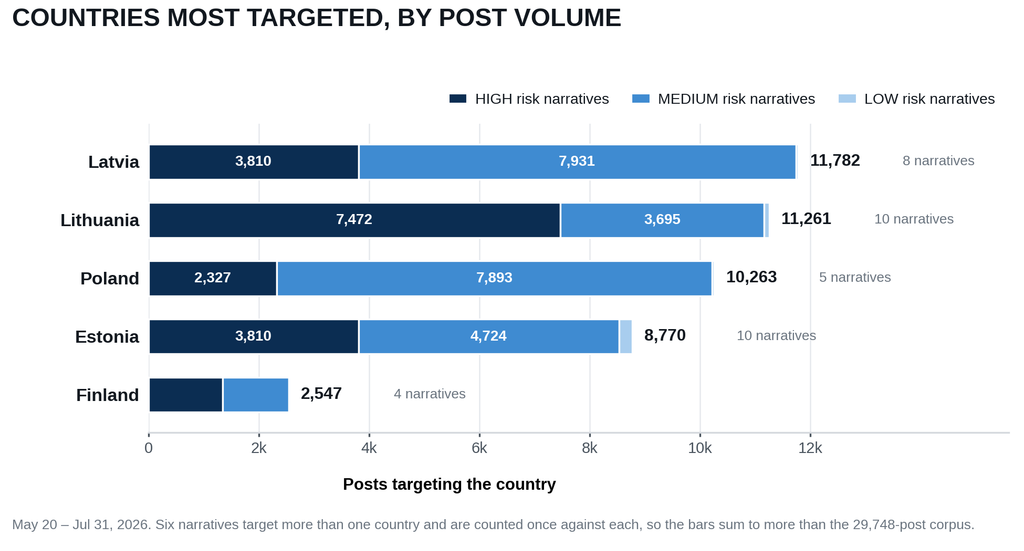
Figure 1. Countries most targeted by post volume in the original assessment. Narratives targeting more than one country are counted against each.
Assessing narrative escalation
Identifying a narrative attack tells an analyst what claim is circulating. Assessing escalation in the information environment asks what that claim is becoming: whether its language is more threatening, whether officials and influential actors reinforce it, and whether it continues beyond the event that first attracted attention.
Coordinated narrative attacks require careful interpretation. Similar wording or synchronized publication can support an assessment of mutually reinforcing amplification, but repetition alone does not prove that all participants received the same instructions. Analysts need to distinguish observable behavior from conclusions about direction, intent, and control.
Context is important. A recurring claim may reflect an ongoing event, familiar editorial priorities, or a sustained effort to keep an accusation available for reuse. The analytical task is to examine what happens when the claim returns: whether it acquires new authority, targets, demands, or threatened consequences.
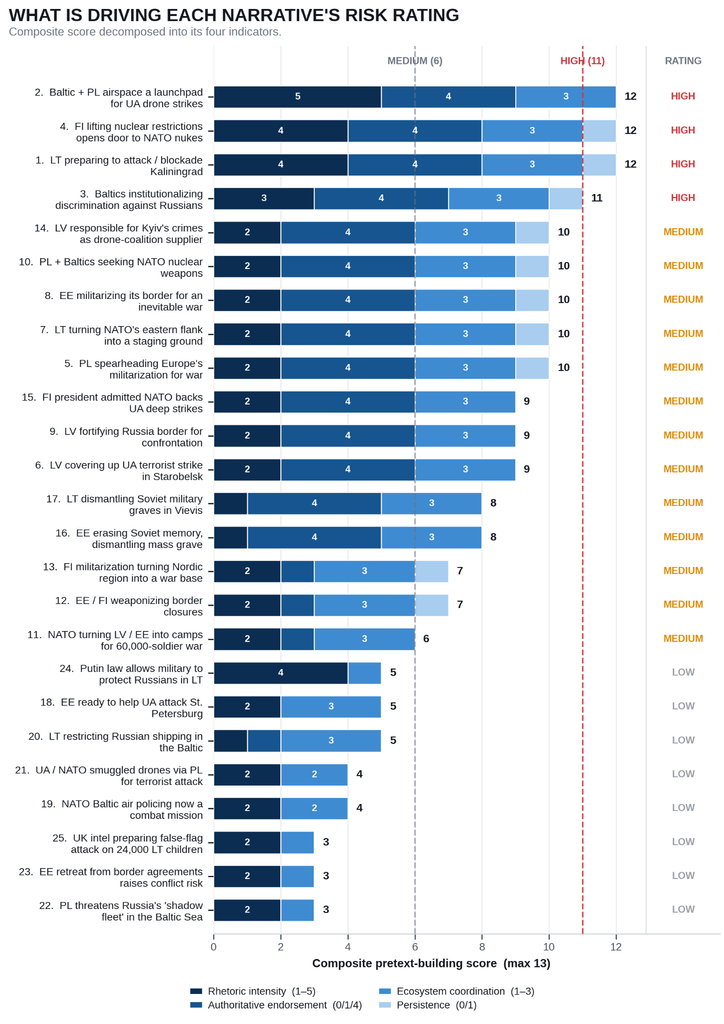
Figure 2. Narrative labels describe monitored claims.
Seven examples of pretext-building narratives
The following narratives describe claims circulating in the Russian and Russian state-aligned information environment.
Narrative 1: Lithuania is portrayed as threatening Kaliningrad
The narrative casts Lithuania as preparing to attack, blockade, or isolate Kaliningrad, then presents Russian retaliation as a defensive response. Remarks about regional security and subsequent Allied exercises are routinely leveraged to reinforce the alleged threat to Russia.
By portraying Lithuania as the aggressor, the narrative frames Russian retaliation as justified. Constant repetition risks making the premise familiar without evidence to support it. Analysts should assess whether new coverage merely restates the claim or signals an escalation, such as through endorsement by senior officials.
Narrative 2: Baltic and Polish territory becomes an alleged launchpad
This narrative alleges that Baltic and Polish territory or airspace enables Ukrainian drone strikes against Russia, then argues that these countries are legitimate targets. This shifts the accusation from supporting Ukraine to direct participation in the war.
The narrative describes mutually reinforcing amplification across official and state-aligned messaging.
Narrative 3: Minority-rights claims become arguments for coercion
The narrative about the Baltic states portrays distinct alleged policies affecting Russian-speaking populations as discrimination. These legal and diplomatic accusations recur across events and, in some messaging, are tied to territorial claims.
Russian officials and state-aligned outlets use minority-rights claims and “right to protect” arguments to justify coercion against the Baltic states. Analysts should watch for these complaints to shift from specific policies to broader demands or territorial rhetoric that challenges Baltic sovereignty.
Narrative 4: Finland’s nuclear-policy debate becomes a targeting threat
The narrative claims that easing Finnish nuclear restrictions opens the way for US or NATO nuclear deployments on Russia’s border. Threatening commentary reframes Finland itself as a potential nuclear target.
This narrative shows how discussion of a legal or policy change can become an assertion about military deployments and then a justification for retaliation. Analysts should watch for language that erases the distinctions between political debate and an actual deployment decision.
Narrative 5: Poland’s defense investments become preparation for war
Another narrative presents Polish defense spending, partnerships, exercises, and nuclear-sharing discussions as part of a plan for direct war with Russia.
Russian and Russian state-aligned channels portray every Polish defense measure as proof that Poland is preparing to attack Russia. Each new announcement is folded into the same claim, and analysts should expect routine defense activity to be reframed as alleged aggression.
Narrative 6: Latvia allegedly covers up a Ukrainian terrorist strike
The narrative recasts a Latvian UN representative’s request to verify allegations about a strike on a college in Starobelsk as evidence that Latvia was covering up a Ukrainian attack.
Russian and Russian state-aligned messaging leveraged Latvia’s statement to widen blame for the Starobelsk strike from Ukraine to its Western supporters. Analysts should track how diplomatic statements in international fora are folded into broader accusations against the Alliance.
Narrative 7: Lithuania’s defense becomes an alleged offensive staging ground
This theme portrays Lithuanian exercises and defensive measures as preparations for a direct attack on Russia, emphasizing an alleged offensive buildup on NATO’s eastern flank.
Analysts should watch for messaging that presents NATO’s response to Russian pressure as the original provocation. Tracking the narrative across the Russian information ecosystem, such as officials, state-owned media, and state-aligned media, will help determine the level of escalation.
Across these seven narratives, the subjects differ, but the progression is similar: an allegation of aggression can become an argument that coercion is a necessary response. Signs of coordination and persistence help analysts assess that progression.
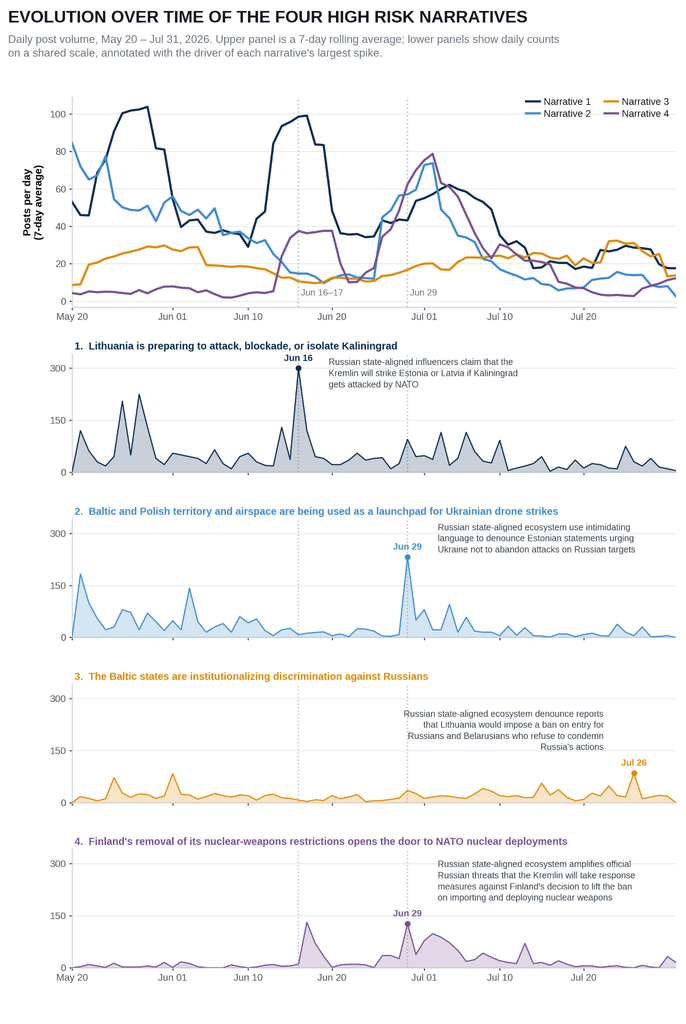
Figure 3. Activity over time for selected narratives: seven-day rolling averages, daily counts, and annotated triggers.
Public security assessments provide the wider context
The Finnish government’s public overview of information influence activities describes a closely related pattern. Its 2026 review says Russian narratives present efforts to strengthen NATO’s defenses as aggression and use even ordinary preparedness and civil-defense activity as evidence of a Western military threat.
These narrative patterns sit within the security environment described in public assessments. NATO leadership and Allied governments have warned in recent months that Russian hybrid activity, including arson, cyber interference, and physical sabotage, is continuously escalating. In October, NATO Secretary General Mark Rutte urged Europe to prepare for more Russian hybrid attacks.
Similarly, a recent assessment by the Danish Defense Intelligence Service (DDIS) cautioned that Russia is taking greater risks, pointing to an increasing threat of destructive cyberattacks and high-risk physical sabotage. Together, these reports underscore an increasingly aggressive threat environment. These assessments help explain why escalating rhetoric deserves scrutiny. They do not, however, validate every claim in a separate dataset or establish a causal link between a specific message and a hostile operation. Nor do they show that any particular country faces an imminent attack.
Russian and Russian-state-aligned narratives are most useful to analysts when read against the wider security picture. Individual accusations against Allies may look like routine propaganda, but alongside government assessments of sabotage, cyber attacks and airspace violations, they can show where Moscow is directing pressure and how narratives support Russian geopolitical objectives. Analysts should keep reading messaging in its wider geopolitical context to better connect information-environment activity with events on the ground.
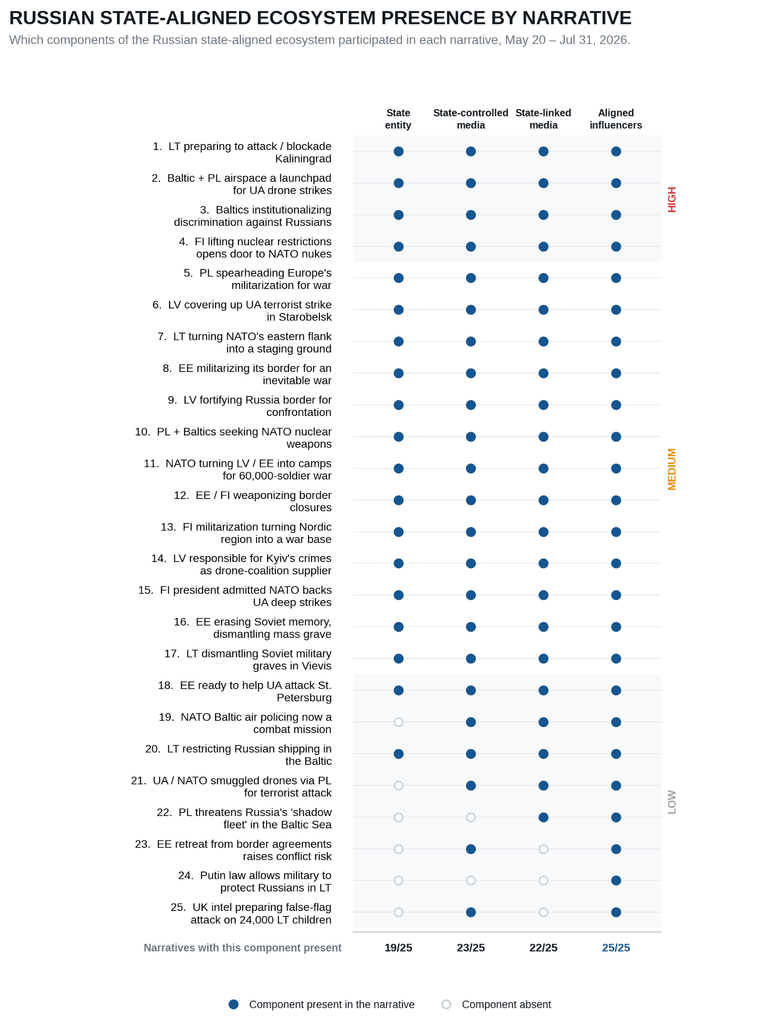
Figure 4. Ecosystem participation by narrative. Presence alone does not demonstrate centralized control.
Turning warning signs into decisions
The practical value of narrative intelligence is a clearer basis for deciding what to examine and how urgently. A team should be able to identify allegations, explain when they changed, what new language or amplification prompted concern, and what remains unknown.
That discipline matters when events move quickly. Another official statement may warrant closer review; it does not automatically warrant a public response. A rapid rebuttal can help when verified facts address a consequential distortion, while repeating an obscure allegation may give it extra attention.
Continuous Narrative Intelligence monitoring should therefore be connected to a decision-making process. Analysts can brief security and communications colleagues on the claim, its development, and the confidence of the assessment. Those teams can then decide what requires further collection, internal preparation, or an evidence-based public response.
The Way Forward – Key Takeaways For Organization Leaders
• Identify narratives and the track changes in meaning, coordination, and persistence. Look for accusations that include detailed demands, named targets, or threatened consequences. Examine reinforcement and recurrence in context, and document the limits of any inference about who directed the activity.
• Use public context without collapsing different kinds of evidence. Compare narrative findings with attributable security assessments and verified reporting. Keep information environment warnings distinct from judgments about capabilities, operational intent, or the likelihood of military action.
• Prepare a proportionate response. Establish who verifies the underlying facts, who evaluates the risk, and who decides whether to communicate a response. Give those teams clear explanations of the relevant policy or activity before distorted claims become difficult to address.
Narrative intelligence aims to improve situational awareness and decision-making. A framework that makes changes in rhetoric, coordination, and persistence easier to assess can help leaders recognize consequential developments while remaining explicit about uncertainty.
A narrative attack can create room for coercion by framing retaliation as defense. Understanding how that argument develops gives organizations an opportunity to test the evidence, recognize manipulation, and respond more clearly before the claim becomes an assumed explanation for the next event.

Sarah Boutboul • Lead Intelligence Analyst
Sarah is a Lead Intelligence Analyst specialising in risk monitoring and foreign malign interference techniques. She draws on an interdisciplinary background with previous career experiences in national security and corporate risk intelligence.
Sarah is a Lead Intelligence Analyst specialising in risk monitoring and foreign malign interference techniques. She draws on an interdisciplinary background with previous career experiences in national security and corporate risk intelligence.

RAV3N Research •
The Blackbird.AI RAV3N Research Team is a cross-disciplinary unit of narrative intelligence analysts that publishes data-driven, evidence-based research on how narrative attacks created by misinformation and disinformation cause financial and reputational harm to public and private sector organizations, including global brands, Fortune 500 companies, government agencies, and executives. Using Blackbird.AI's Constellation Narrative Intelligence Platform, our analysts identify the influence behind narratives, the networks they touch, the anomalous bot behavior that scales them, and the cohorts and communities that connect them to surface the full picture of how narratives form and spread.
The Blackbird.AI RAV3N Research Team is a cross-disciplinary unit of narrative intelligence analysts that publishes data-driven, evidence-based research on how narrative attacks created by misinformation and disinformation cause financial and reputational harm to public and private sector organizations, including global brands, Fortune 500 companies, government agencies, and executives. Using Blackbird.AI's Constellation Narrative Intelligence Platform, our analysts identify the influence behind narratives, the networks they touch, the anomalous bot behavior that scales them, and the cohorts and communities that connect them to surface the full picture of how narratives form and spread.
About Blackbird.AI

Blackbird.AI is the Narrative Intelligence Detection and Response company protecting executives, organizations, and institutions from narrative-based disinformation attacks that cause financial, operational, reputational, and physical harm. Blackbird.AI’s Constellation Platform identifies the actors, networks, bots, and communities driving them; and turns those signals into early warning, decision intelligence, and coordinated response. Blackbird.AI brings Narrative Intelligence into the workflows where teams already operate, including cybersecurity, communications, legal, executive, and public-sector environments, with agentic response capabilities and MCP-enabled integrations that help organizations act faster. Founded by AI experts, threat intelligence analysts, and national security professionals, Blackbird.AI helps customers defend trust, strengthen resilience, and Own The Narrative. To learn more, visit Blackbird.AI.