


Retailers Are Facing a New Kind of Brand Attack: Narrative Attacks
 Amanda Burkard
Customer experiences and corporate decisions can spark narrative attacks that reshape how shoppers and investors perceive a brand. As narratives gain traction, they can influence retailers' purchasing behavior, brand reputation, and market valuation.

Dall-E 3
Quick Answers
How do narrative attacks and disinformation affect retail brands? Narrative attacks can turn a single incident or corporate decision into a negative perception of a retailer. As they spread, they can weaken trust, influence purchasing behavior, and damage brand reputation.
How do narrative attacks intensify during peak retail shopping seasons? During peak shopping periods like back-to-school or the holidays, consumer attention and purchasing activity are concentrated, giving emerging narrative attacks more opportunities to gain traction. That heightened activity can give coordinated campaigns greater visibility and allow them to reach consumers more quickly.
How can retailers detect and respond to disinformation narrative attacks? A narrative intelligence platform helps retail organizations and their teams identify which narratives are spreading, who is amplifying them, and how quickly they are gaining traction about an organization. That visibility helps teams assess the potential impact on customer trust and loyalty, purchasing behavior, and brand reputation, enabling them to respond earlier and with greater clarity.
A single narrative attack against a retail brand can reshape consumer behavior within hours. For retailers, the risk often starts with a real event and grows as online discussion shapes shoppers’ perceptions of the brand. A corporate policy decision draws criticism; a negative customer interaction is captured on video and goes viral; a product recall raises safety questions; an executive statement is taken out of context; or a fake website impersonating a trusted retailer defrauds shoppers, who then blame the real brand. In retail, where brand perception and loyalty are closely tied to consumer spending, any of these events can become the starting point for a coordinated narrative attack that leads to quantifiable business losses and customer attrition.
As the event spreads online, perceptions of the brand can shift and be amplified across social platforms and online communities through coordinated disinformation campaigns, bot networks, and inauthentic accounts, eventually influencing consumer or investor behavior. Narrative Intelligence gives retailers visibility into which narratives are spreading and how they are spreading, before a harmful narrative attack erodes customer loyalty, damages brand reputation, or creates severe financial losses.
DOWNLOAD: Complimentary Gartner Emerging Market Quadrant for Narrative Intelligence
Narrative risk compounds during peak shopping periods. Back-to-school season, the second-largest consumer spending event of the year, brings heightened attention to retailers as shoppers actively search for deals and make purchasing decisions. That increased visibility can help emerging narratives gain traction and reach larger audiences more quickly. For example, bad actors can exploit heightened shopper attention by directing online consumers toward fraudulent websites that imitate legitimate retailers. Forbes reported in 2026 that these sites are increasingly sophisticated, using social media advertising and AI-generated content to appear legitimate and attract shoppers. When consumers are defrauded by an impostor site, they may associate the negative experience with the legitimate brand, regardless of the retailer’s involvement, and share that experience online. Bad actors can then amplify those posts or reframe them as evidence that the retailer itself is unsafe or untrustworthy, turning an isolated fraud incident into a harmful narrative about the brand.
While consumer attention is already at its peak, a narrative that might gain moderate traction in a quieter period can accelerate rapidly. Retailers need Narrative Intelligence detection and response strategies in place before peak shopping seasons begin. For retail organizations and their leaders, visibility into how a narrative is forming, who is amplifying it, and how fast it is spreading can help protect businesses from customer attrition, reputational damage, and financial loss caused by harmful narrative attacks.
How are online narrative attacks affecting retail stock prices and investor confidence?
Online narratives can directly influence retail stock prices and investor confidence by shaping market perceptions of a company. The commercial consequences of a narrative attack are quantifiable in financial terms. For example, one major big-box retailer saw its stock price fall 33% following a sustained narrative campaign targeting its corporate policies, resulting in more than $20 billion in lost shareholder value. Conversely, narratives can also move markets in the opposite direction. In July 2025, American retailer Kohl’s became a “meme stock” when coordinated online narratives drove a 100% intraday surge in its stock price, with no underlying change in business performance. There were no earnings announcements, no product pivots, and no marketing campaigns. Meme-ready narratives and coordinated amplification moved the stock on sentiment alone. In both cases, narrative activity moved the stock prices before the companies had time to respond. Narrative Intelligence helps retail organizations see these narratives forming before they begin influencing stock prices.
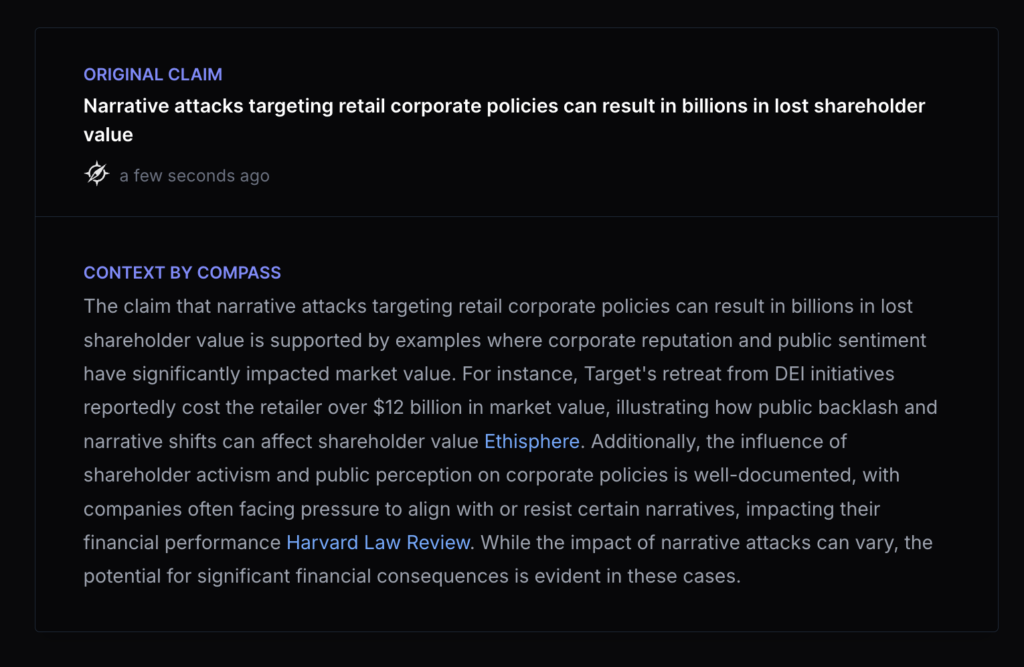
This claim was checked by Compass by Blackbird.AI.
How do narrative attacks damage retail brand reputation?
Narrative attacks can damage a retailer’s reputation by turning a specific incident or negative experience into a broader perception of the brand. A viral customer interaction can influence how shoppers view the company’s treatment of customers. A product issue can raise wider questions about quality or safety. Corporate decisions can also become attached to narratives about the retailer’s values or leadership. As these narratives continue to circulate, they can shape brand perception and reputation and erode customer trust over time.
Retailers can also face reputational damage from activities they did not create. Forbes reported in 2026 that increasingly sophisticated fake online storefronts are using social media advertising and AI-generated content to imitate established retailers and attract shoppers. One of many issues with this is that consumers defrauded by an impostor site may associate a bad experience with the legitimate retailer or brand. They may also receive fraudulent or lower-quality products and associate them with the real brand. As those experiences are shared across online platforms and communities, they can contribute to narratives that the retailer’s digital presence is untrustworthy or that its products are unsafe or of poor quality.
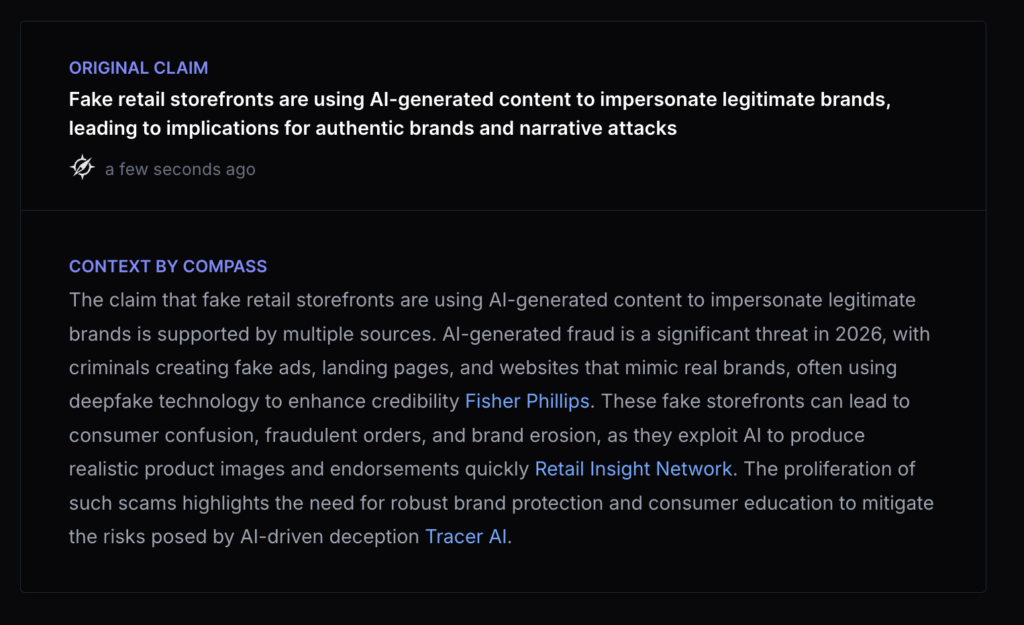
This claim was checked by Compass by Blackbird.AI.
How do narrative attacks influence purchasing behavior?
Narrative attacks can influence purchasing behavior by giving shoppers a reason to avoid a retailer, delay a purchase, or spend with a competitor. Boycott narratives are among the clearest examples because they turn a broader controversy into a direct call for consumers to change where they spend their money. A global coffeehouse chain experienced six consecutive quarters of declining global comparable-store sales before returning to growth in late 2025, during a period when boycott narratives tied to geopolitical events were also circulating around the brand. The company faced several business pressures during this period, so the sales decline cannot be attributed to boycott activity alone, but the example shows how sustained negative narratives can remain part of the consumer environment long after the original controversy begins.
Purchasing decisions can also be influenced closer to the point of sale. Manipulated reviews can change how shoppers perceive a product’s quality or reliability before they buy it, while narratives about product safety or brand trust can discourage purchases across an entire category. The FTC has specifically warned that consumers rely on online reviews when deciding what to buy and has prohibited fake or deceptive reviews that can distort those decisions. For retailers, the impact becomes measurable when narrative activity begins to change traffic, conversion rates, repeat purchases, or long-term customer loyalty.
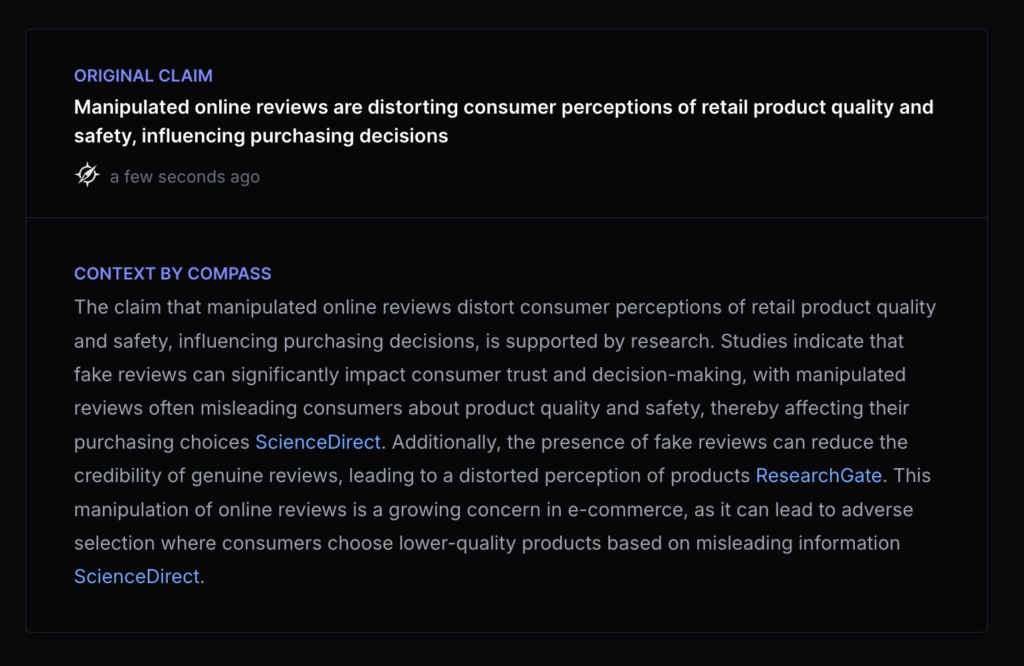
This claim was checked by Compass by Blackbird.AI
The Way Forward – Key Takeaways for Leaders
Most retailers already monitor brand mentions and sentiment through social listening platforms. Narrative Intelligence is the layer on top of social listening that helps teams understand when an isolated incident is developing into a broader narrative attack against the organization by identifying which narratives are gaining traction and how they are spreading across communities. That visibility gives retail organizations and their leaders more context to recognize when a customer issue, product concern, or impersonation incident is becoming a larger reputational or business risk.
- Build Narrative Intelligence into retail risk monitoring. Retail organizations need visibility into which narratives are gaining traction, who is amplifying them, and how quickly they are spreading. This is especially important ahead of peak shopping periods when consumer attention and brand exposure are already elevated.
- Align communications, security, and other teams around narrative risk. Narrative risk touches multiple functions. Shared visibility into how narratives form and spread enables a coordinated response across the organization.
- Integrate Narrative Intelligence into brand and crisis response plans. Detecting narrative threats early enables retail organizations to respond before a harmful narrative erodes customer loyalty, brand reputation, or market valuation.
For retailers, narrative attacks can influence how consumers and investors perceive a brand long after the original event has passed. Narrative Intelligence gives organizations earlier visibility into how narratives form and spread, helping brands and leaders protect customer loyalty, brand reputation, and market value.
Amanda Burkard • Marketing Manager
Amanda Burkard is a Marketing Manager at Blackbird.AI, where she supports content development, demand generation, event coordination, and marketing operations. Outside of work, Amanda is an accomplished Irish dancer. She holds a B.A. in Psychology from the University of Virginia.
Amanda Burkard is a Marketing Manager at Blackbird.AI, where she supports content development, demand generation, event coordination, and marketing operations. Outside of work, Amanda is an accomplished Irish dancer. She holds a B.A. in Psychology from the University of Virginia.
About Blackbird.AI

Blackbird.AI is the Narrative Intelligence Detection and Response company protecting executives, organizations, and institutions from narrative-based disinformation attacks that cause financial, operational, reputational, and physical harm. Blackbird.AI’s Constellation Platform identifies the actors, networks, bots, and communities driving them; and turns those signals into early warning, decision intelligence, and coordinated response. Blackbird.AI brings Narrative Intelligence into the workflows where teams already operate, including cybersecurity, communications, legal, executive, and public-sector environments, with agentic response capabilities and MCP-enabled integrations that help organizations act faster. Founded by AI experts, threat intelligence analysts, and national security professionals, Blackbird.AI helps customers defend trust, strengthen resilience, and Own The Narrative. To learn more, visit Blackbird.AI.